Subscribe to GEN
Login to GEN

Practical, vendor-neutral and vendor-aligned training from career engineers who deliver and support real systems at scale and pace every day. Whether you want to upskill an individual, onboard a new team or standardise processes across an organisation, we provide structured training that is relevant, current and easy to apply.
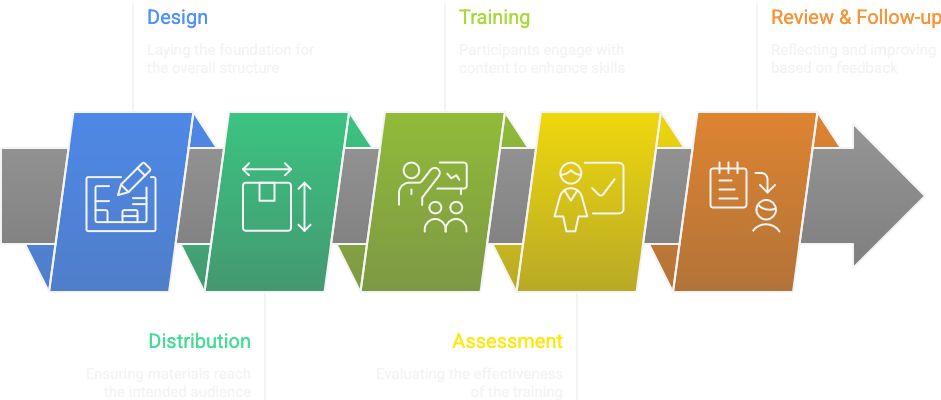
We offer remote one-to-one coaching, remote group sessions and on-site delivery across the UK. Training can be delivered as bite-sized sessions, full-day workshops, or a staged programme with exercises, coursework and assessments.
Training should change how people work, not just how they feel on the day. We focus on clear outcomes, hands-on practice, and real-world scenarios that match your environment. Sessions can include labs, guided build-outs, troubleshooting drills, and best-practice checklists that your team can keep using long after the course.
Some learners need a confident start; others need depth, speed and challenge. We tailor delivery to suit your audience, from first principles through to advanced design, automation, security, resilience and troubleshooting. If you have mixed ability within a team, we can assess current skills and recommend a route that brings everyone up together without holding experienced staff back.
We cover a wide range of infrastructure, cloud, productivity, telephony, automation and cyber topics, including, but not limited to, the following.
Windows client and server, Linux, Microsoft 365, identity and access fundamentals, endpoint management, collaboration, and secure ways of working.
Proxmox, Hyper-V, storage and networking for virtual environments, backup strategies, disaster recovery concepts, capacity planning, and operational best practice.
n8n and workflow automation, API-led integration, repeatable operations, documentation patterns, and safe automation approaches that reduce risk rather than introduce it.
Asterisk and FreePBX, SIP fundamentals, call flow design, resilient deployments, plus network topics including DrayTek, HPE switching, segmentation and troubleshooting.
We offer a structured technical pathway across Linux, Proxmox, Ceph, DrayTek, Synology, FreePBX and Asterisk, and large language models. These modules can be delivered individually or combined into a staged programme, depending on whether your team needs foundations, operational engineering depth, or advanced troubleshooting and recovery capability.
Standard remote course delivery is normally provided over WebEx in 6 x 1 hour, 4 x 1.5 hour or 3 x 2 hour blocks across the day, to achieve 6 hours of learning with breaks between sessions.
| Course | Price per day | Days | Summary |
| Linux Level 1: Foundations | £695 | 1 to 2 | Core Linux concepts, filesystem layout, boot flow, storage basics, networking awareness and safe shell usage. |
| Linux Level 2: Engineering | £648 | 2 | Boot process detail, systemd, journald, hardware discovery, networking, LVM, mounts, SSH/SFTP and remote storage. |
| Linux Level 3: Advanced Operations | £698 | 2 to 3 | Kernel modules, process and memory behaviour, firewalling, permissions models, backup strategy and incident recovery. |
| Course | Price per day | Days | Summary |
| Proxmox Level 1: Foundations | £695 | 1 to 2 | GUI navigation, guest creation, virtual hardware, storage, networking, clustering basics, backups and good practice. |
| Proxmox Level 2: Engineering | £698 | 1 to 2 | Architecture, filesystem layout, networking, KVM/QEMU, LXC, CLI guest management, clustering and backup workflows. |
| Proxmox Level 3: Advanced | £748 | 2 | Upgrades, diagnostics, boot recovery, offline disk repair, emergency mode handling and block-backed storage recovery. |
| Proxmox Builders Course | £748 | 1 | Platform choice, design, sizing, scoping, host build, networking, local and shared storage, encryption, access control, API, automation, high availability and fragility. Delivered as 2 half days. |
| Course | Price per day | Days | Summary |
| Ceph Level 1: Foundations | £795 | 1 to 1.5 | Distributed storage architecture, RADOS, pools, placement groups, CRUSH and daemon roles. |
| Ceph Level 2: Operations and Recovery | £748 | 1.5 to 2 | CLI usage, health interpretation, replication and erasure coding, scrubbing, PG behaviour and recovery workflows. |
| Course | Price per day | Days | Summary |
| DrayTek Level 1: Routing and WAN Essentials | £888 | 0.5 | PPPoE and PPPoA, routing, NAT, port forwarding, load balancing, firewalling, policy routes, VLANs, VPNs and diagnostics. |
| Course | Price per day | Days | Summary |
| Synology Level 1: Foundations | £695 | 1 | Provisioning, DSM setup, networking basics, storage pools, RAID, arrays, volumes, users, shared folders, permissions, applications and backup concepts. |
| Synology Level 2: Engineering | £798 | 1 to 2 | SMB, AFP, FTP, SFTP and NFS, advanced permissions, bonding, VLANs, storage pools, volumes, SSD cache, DNS, LDAP, Drive, ShareSync and RADIUS. |
| Synology Level 3: Advanced Operations | £848 | 1 to 2 | Command line work, filesystem layout, logs, syslog, volume and filesystem tools, APIs, disaster recovery and high availability. |
| Course | Price per day | Days | Summary |
| FreePBX Level 1: Foundations | £695 | 1 | Installation from the distro, modules, networking, PJSIP, trunks, extensions, inbound and outbound routes, voicemail, announcements, IVR, ring groups and time conditions. |
| FreePBX Level 2: Engineering | £798 | 1 to 2 | Call flow control, recordings, callback, conferences, DISA, dynamic routes, follow me, paging, parking, queues, blacklist, Superfecta, feature codes, advanced settings and backup or restore. |
| FreePBX Level 3: Advanced Engineering and Diagnostics | £848 | 1 to 2 | SIPS, SRTP, fwconsole, Asterisk CLI, dialplans, custom dialplan integration, custom Superfecta development, API-powered IVR design, and advanced diagnostics. |
| Course | Price per day | Days | Summary |
| Asterisk Advanced: Core, Smart IVRs and Deep Diagnostics | £848 | 2 to 3 | Asterisk core functions, modules, codecs, channels, ARI, AMI, advanced dialplans, smart IVRs, speech APIs, AI or LLM integrations, PJSIP, SIPS, SRTP and deep diagnostics. |
| Course | Price per day | Days | Summary |
| Large Language Models and AI: Foundation | £795 | 1 to 2 | LLM fundamentals, basic architecture, tokens, prompts, embeddings, vector search, workflow tooling, and model serving with Ollama and vLLM. |
| Large Language Models and AI: Engineering | £848 | 2 | Real-world AI use cases, business-process integration, PHP, Python and n8n workflows, model selection, hosting strategy and cost-versus-value design. |
The courses listed above are our standard modular training plans, designed to give a clear structure for common learning paths. In most cases, however, we tailor the course to the client requirement, so the content, pace, depth and examples match the actual environment, responsibilities and skill level of the learners.
Course pricing does not include post-training assessment by default, but this is something we can and do provide where needed. We also limit delivery to a maximum of 10 learners per session, so that training remains interactive, practical and useful rather than becoming a passive webinar.
Full booking, delivery and course conditions are defined in our training policy.
If you need repeatable internal training, we can structure course materials specifically for your organisation, aligned to your standards and tooling.
We can also provide assessments to benchmark knowledge before and after training, helping you demonstrate progress and identify where further coaching will have the most impact.
Up to 10. Unless we explicitly agree otherwise in writing, the maximum class size is 10 attendees per session, and the class size for each session is set in the Statement of Work and must not be exceeded. If more attendees are needed, we may need a revised Statement of Work and fees, and may reschedule so the training is still delivered properly. Smaller groups do better, especially on technical sessions, because there is more room for questions and discussion.
By audio and video call, with screen sharing where it helps, normally over WebEx. A standard remote course day is 6 hours of learning, delivered as 6 blocks of 1 hour, 4 of 1.5 hours or 3 of 2 hours, with breaks between them, and no session runs longer than 2 hours including questions. Sessions are held in a time slot agreed in advance and are delivered in English.
Yes. As well as remote one-to-one coaching and remote group sessions, we deliver training on site across the UK. Our training policy is written around remote delivery, so on-site arrangements are agreed with us when the course is booked.
At least 14 days. At the point of booking we need the requirements in full, so that we can prepare materials and plan the course: the outcomes you want, who is attending and what they already know, the systems and versions they work on, and any constraints or example scenarios. A Statement of Work setting out the scope, class size, schedule and delivery medium is agreed before training is delivered.
Training slots reserve specialist time and usually involve preparation, so cancellations are charged at the full rate. The exception is a rebooking onto the same course, with substantially the same requirements, on a date within 14 days of the original session, where there has been only one prior rebooking for that session. Any other cancellation or reschedule is charged in full.
If a third-party platform such as WebEx fails for reasons outside either party's reasonable control, or we have to cancel because of sickness, an operational crisis or another event outside our reasonable control, the session is rebooked and the lost time is carried over, so you still receive the delivery time you contracted for.
Not by default. Course pricing does not include post-training assessment, but we can and do provide it where it is needed, including assessments before and after training to benchmark knowledge, show progress and identify where further coaching will have the most impact.
Materials are usually provided electronically, by secure link, email or the HelpDesk, for use within your organisation. They remain GEN's intellectual property and must not be resold, published or redistributed outside your organisation without our written consent, and sessions may not be recorded without our prior written consent. Where you need repeatable internal training, we can structure course materials specifically for your organisation.
Tell us who needs training, what they work on and what they need to be able to do afterwards. We will recommend a route through the catalogue, or tailor the course to your environment, and agree the scope, class size and schedule with you before the training is delivered.